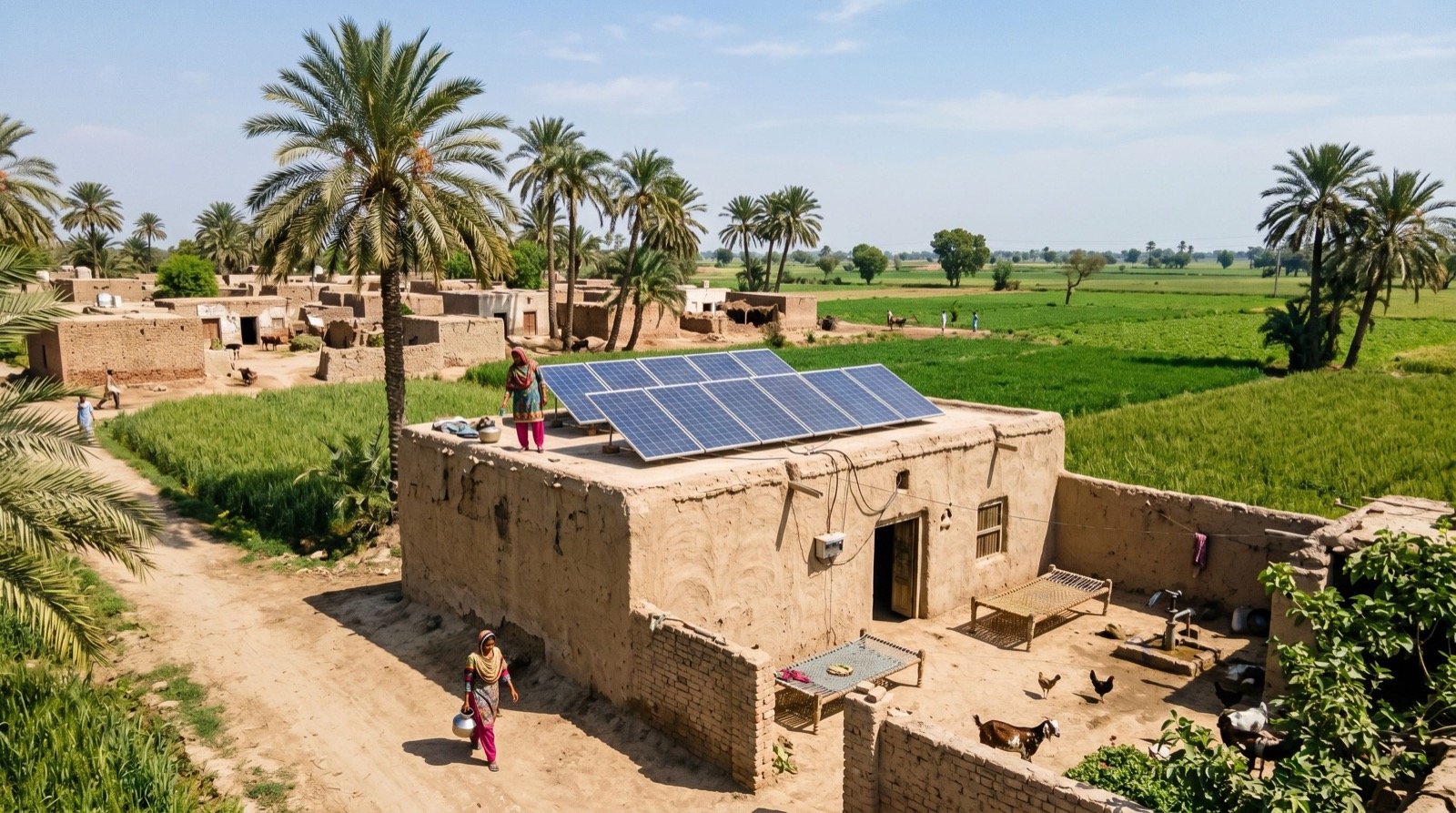

For millions of households, the promise of solar is not just a smaller electricity bill, it is the freedom to keep the fans running and the lights on when the grid goes dark. Battery storage is what delivers that freedom, and in 2026 it has moved from an expensive luxury to a mainstream part of well-designed home solar in Pakistan. As load shedding continues to disrupt daily life in Islamabad, Peshawar, and beyond, understanding solar batteries has become as important as understanding the panels on the roof.
Yet battery storage is also where budgets balloon and mistakes multiply. Buy too little capacity and your backup dies mid-evening; buy the wrong chemistry and you replace it years too soon. This guide explains how solar batteries work, how to size a battery bank for load shedding, and how to choose between the technologies competing for space in your home.
Why battery storage matters for load shedding
A standard grid-tied solar system, however large, goes completely dark during an outage because it is designed to shut off for the safety of line workers. That surprises many first-time buyers who assumed any solar system means uninterrupted power. Only a system with battery storage, paired with a hybrid inverter, can carry your home through a blackout.
Batteries store surplus daytime generation and release it when the grid fails or the sun sets. This turns solar from a daytime bill-cutter into round-the-clock energy security. For homes facing several hours of daily outages, that difference is the entire reason to install solar in the first place. Professional solar panels in Islamabad designs increasingly pair a modest array with lithium storage precisely to guarantee evening backup.
What a battery can and cannot power
Batteries are sized in kilowatt-hours (kWh) of usable capacity, and every appliance you back up draws from that pool. Running fans, lights, a fridge, and phone chargers is inexpensive, while air conditioners and electric water heaters drain a bank rapidly. Deciding your backup priorities before sizing keeps the project affordable.
- Easy to back up: LED lights, ceiling fans, routers, phone chargers, TV.
- Moderate: refrigerator, freezer, a single inverter AC for limited hours.
- Expensive to back up: multiple ACs, electric geysers, motors, ovens.
- Rule of thumb: back up essentials fully, luxuries selectively.
Lithium vs lead-acid batteries compared
The battery market splits mainly between traditional lead-acid (including tubular) and modern lithium (typically LiFePO4). They differ enormously in lifespan, usable depth of discharge, and total cost of ownership. The table below lays out the trade-offs.
| Feature | Lead-Acid / Tubular | Lithium (LiFePO4) |
|---|---|---|
| Upfront cost | Lower | Higher |
| Cycle life | ~500–1,500 cycles | ~4,000–6,000 cycles |
| Usable depth of discharge | ~50% | ~90–95% |
| Maintenance | Regular (water top-up) | Virtually none |
| Lifespan | 3–5 years | 8–12 years |
| Cost per usable cycle | Higher over time | Lower over time |
While lead-acid tempts with a low sticker price, lithium usually wins on cost per usable kilowatt-hour over its life because you can discharge more of it and replace it far less often. For homeowners investing in quality solar company in Peshawar installations, lithium has become the default recommendation in 2026 for anyone planning to stay in their home more than a few years.
How to size a battery bank for backup
Sizing storage is about matching usable capacity to the load and duration you want to cover. Underestimating leaves you in the dark; overestimating wastes thousands of rupees on capacity you never cycle.
- List the appliances you must run during an outage and their wattages.
- Estimate how many hours you need to power them (your typical outage length).
- Multiply watts by hours to get watt-hours, then divide by 1,000 for kWh.
- Divide by the battery’s usable depth of discharge to find rated capacity needed.
- Add a 20 percent buffer for cloudy days and future load growth.
For example, backing up 600 W of essential loads for five hours needs 3 kWh of delivered energy. With a lithium battery discharging to 90 percent, you would specify roughly 3.3 kWh of rated capacity, plus a buffer.
Hybrid systems: the best of both worlds
A hybrid solar system ties your panels, batteries, and the grid together under one intelligent inverter. During the day it powers your home and charges the battery; surplus flows to the grid for net-metering credit. When the grid fails, it seamlessly switches to battery power. This architecture is why hybrids have become the standard recommendation for Pakistani homes that want both savings and backup.
Getting the most life from your battery bank
A battery is a wearing part, and how you treat it decides whether it lasts three years or twelve. Depth of discharge is the biggest lever: routinely draining a lead-acid battery to empty destroys it quickly, which is why usable capacity is always lower than rated capacity. Lithium tolerates deep cycling far better, but even it appreciates being kept within sensible limits.
Temperature is the other major factor. Batteries dislike extreme heat, and Pakistan’s summers can push a poorly ventilated battery room well past comfortable limits, accelerating degradation. Installing the bank in a shaded, airy space and avoiding direct sun meaningfully extends its working life.
- Respect the recommended depth of discharge for your chemistry.
- Keep batteries cool and ventilated, away from direct summer heat.
- Avoid leaving lead-acid batteries in a discharged state for long periods.
- Monitor state of charge so you catch a failing cell early.
- Schedule periodic professional checks of connections and terminals.
A practical tip that pays for itself: enable your inverter’s monitoring app and check it weekly. Spotting a battery that no longer holds its expected charge lets you act under warranty rather than discovering the problem during a long evening outage.
Frequently Asked Questions
How many batteries do I need to run my house during load shedding?
It depends on your essential load and outage length, but a typical home backing up lights, fans, a fridge, and electronics for four to six hours needs roughly 5 to 10 kWh of usable storage. Adding air conditioning significantly increases the requirement, so prioritize which loads truly need backup.
Is lithium battery worth the extra cost over lead-acid?
For most households, yes. Lithium delivers deeper usable capacity, lasts two to three times longer, and needs no maintenance, so its cost per delivered kilowatt-hour is usually lower despite the higher upfront price. Lead-acid still suits tight budgets or very light backup needs.
Can I add batteries to an existing solar system?
Sometimes. If you already have a hybrid or battery-ready inverter, adding storage is straightforward. A plain grid-tied string inverter usually must be replaced or supplemented with a battery inverter, so plan for storage from the start if backup is on your horizon.
How long do solar batteries last?
Lithium iron phosphate batteries typically last 8 to 12 years and thousands of cycles, while lead-acid lasts 3 to 5 years. Global adoption of battery storage is accelerating rapidly, as documented by the International Energy Agency, and falling prices continue to improve the value proposition each year.
Power through outages with trusted professionals
Battery storage is the piece that turns solar from a sunny-day saving into genuine energy independence, keeping your home running through every bout of load shedding. The keys are choosing the right chemistry for your timeframe, sizing the bank to your real backup needs, and building it around a capable hybrid inverter. Get those decisions right and you gain reliable power and lower bills for years to come. Have the design handled by trusted professionals who size storage around your actual loads rather than a rough guess. Ready to stop dreading the next outage? Request a hybrid solar and battery proposal today and take control of your power.